
A farmer really knows his field, his land, the soil, the crop (living plants grown by farmers). Each species of bug that could harm the harvest and could damage the crop during the cultivating process. Climate conditions such as the wind, rain, snow, heat and dust, they know all the effects of these in their soil, they are aware of how climate conditions could hurt the harvest creating huge issues for them. They collect data, on a basic level but often they don’t how what to do with it, that’s why they began working along with data collectors that help them to analyze their soil and potential productivity so they can increase and make more effective the process of production.
For farmers it’s crucial to maximize and increase their production mainly because of the world’s crazy growing population. By the year 2050 they estimate that farmers will need to feed 9 billion people aproximately. The result of working along with science and technology (agronomists) creates a more accurate way to produce and treat the soil.
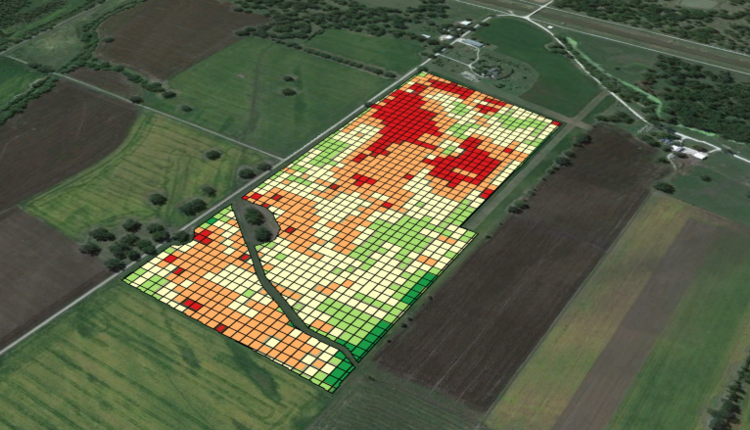
Precision agriculture is often called satellite farming, it started in the early 1990s and mainly uses GPS tracking systems and satellite images to monitor the production. They are able to scan the soil, using satellite images, identifying minerals present in the soil, so they can use the right amount of nutrients, water, pesticides to treat the soil according to their need. For example, some areas of the field might be richer in minerals than others areas of the same field, so they will focus on those sections that need more nutrients or water etc. Its a very specific way to treat the soil. A very precise way to treat the soil that in the end help them to save water, chemicals and labor cost and time.
Using these precision technology systems, farmers can identify an exact location in a field to determine how productive the area can be. Before the entire field was treated as one unit, using an equal amount of pesticides, water, herbicides, etc, but now farmers can find out which areas are more suitable for which crops so they don’t waste seed, water, fertilizer, or pesticides. For example if they analize the soil they will decide what is best to spread seeds on, based on the minerals that the soil already has, instead of planting potatoes perhaps the soil is better for planting beets or carrots.
Of course, this technology is not cheap, high tech equipment its expensive, we could assume that only big producers can access to these tools. But recently it is possible for small producers to have access to this tools by renting equipment by the hour or so. Sort of like an uber service. It’s not necessary to own these expensive devices to optimize the production of crops and try to reduce the amount of chemicals in the production process, making these technology available for most of farmers.
In other words, farmers with the help of technology, are able to minimize their production cost as well as the impact on the environment by analyzing the soil, its characteristics, and needs, the use of less or just the necessary amount of pesticides and water are essential for our health and environment care.
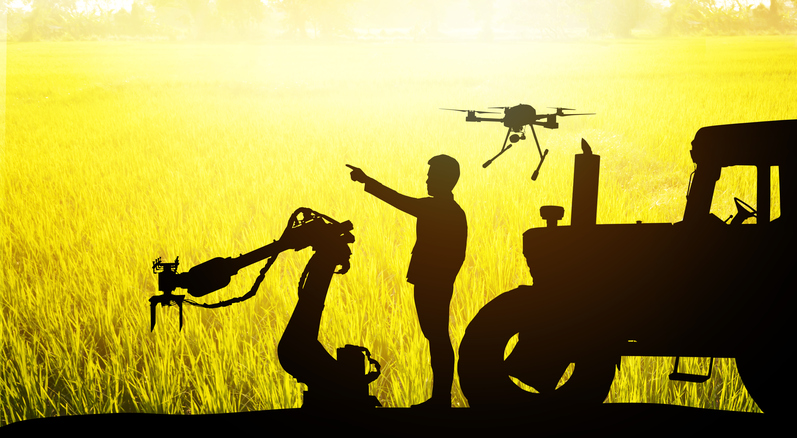
Now they have more control over their fields, they are able to use advanced tech on machinery, using self-drive tractors, drones to monitor the field and also to take high-quality images of the fields. Other innovations include a solar-powered machine that identifies weeds and precisely kills them with a dose of herbicide or lasers using drones to do the task, just to name some examples of how technology is helping farmers to improve their techniques and production.
All these tools help to keep developing the precision agriculture that is so on demand by mainly the world’s rapidly population. It is fundamental to find ways to make it effective but at the same time make a low negative impact in our environment as much as possible.
 Food & Technology